Boris Cherny, Anthropic: “I have not written a single line of code since November”
As part of our F/ai program, we hosted a talk with Boris Cherny, Creator & Head of Anthropic’s Claude Code. Here are the main takeaways from his journey and his vision for the future of software.
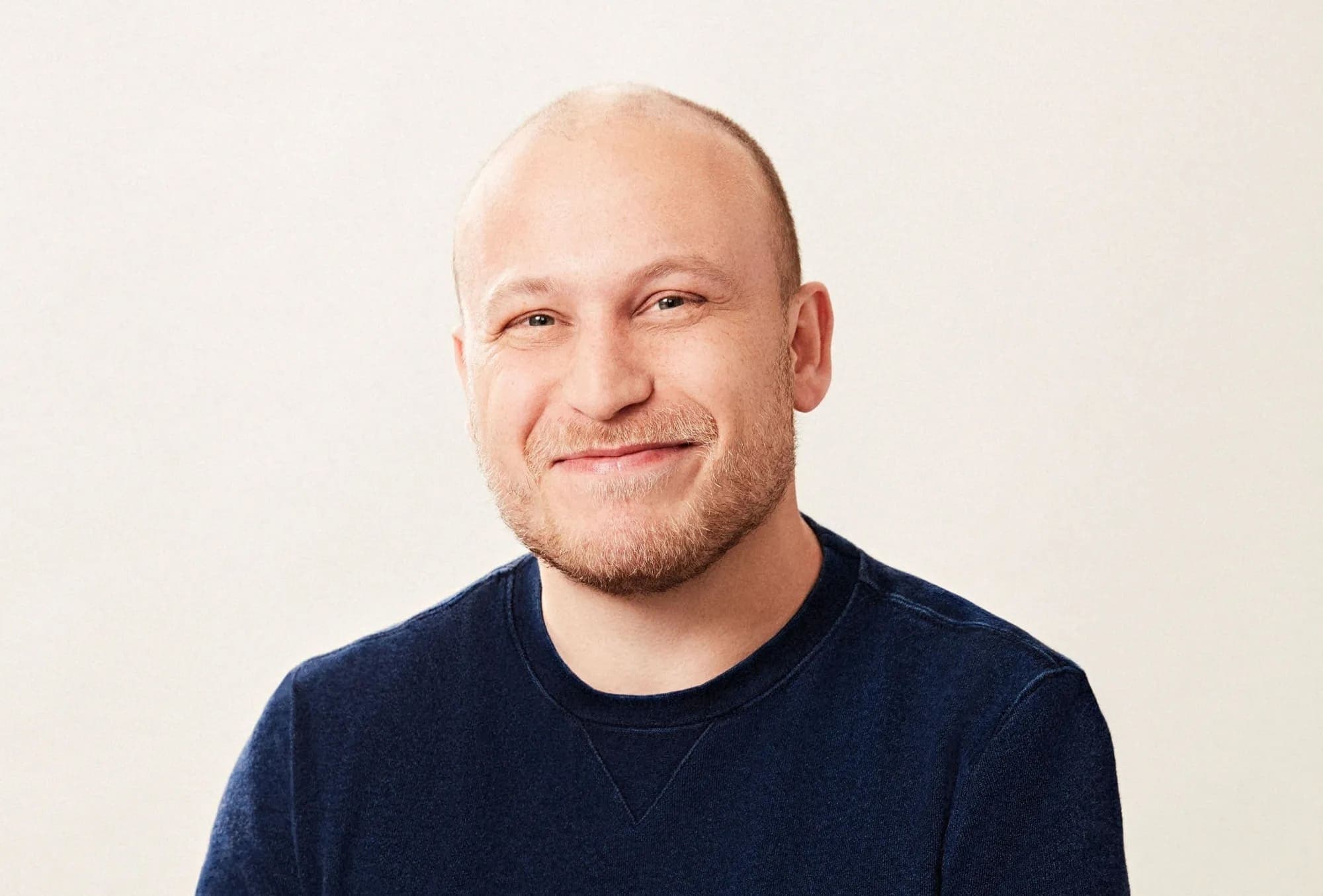
Prototype what might come next – that was the simple but also important mission for Boris Cherny when he joined Anthropic at the end of 2024.
The team he joined sat at the intersection of product and model development. Their role was to explore where AI capabilities could translate into meaningful products – and just as importantly, where products could generate the signals needed to improve the models themselves.
In his talk with Boris Cherny and our F/ai teams on March 11th, he recalls that there was a sense of “product overhang”: models were already capable of far more than existing tools allowed people to do. So he began experimenting.
Within a month, that experimentation led to a small prototype: a simple terminal tool that could interact with the Claude API to help write and modify code. It didn’t even have a graphical interface – it was just a command-line program.
He called it Claude Code.
The next day he shared it with his immediate team. When he returned to the office, something unexpected had happened: people were already using it for their daily work.
The Accidental Product
The early story of Claude Code is almost unusually simple. There was no marketing plan, no formal launch strategy, and no initial sales effort. The tool spread internally because engineers found it genuinely useful.
Over the following months the prototype spread across the company. Teams adopted it organically. Eventually the signal became impossible to ignore: if employees were relying on it every day, it should probably exist outside the company as well.
Claude Code was released publicly in February the following year. What happened next surprised even its creators.
According to Cherny, the growth curve didn’t just accelerate – it accelerated faster over time. Each new model improved the tool’s performance, and each improvement drove more adoption. For Cherny, the distinction between model and product has now largely disappeared: “For us, the model is the product and the product is the model.”
Products like Claude Code allow Anthropic to observe how models behave in the real world. That feedback loop is essential for improving reliability, alignment, and safety – things that cannot be fully tested in laboratory conditions.
An Unusual Software Adoption Story
Boris also shared that one of the most striking aspects of Claude Code’s growth was how little it resembled traditional enterprise software adoption.
Inside Anthropic there had been an early debate about strategy. Should the tool be sold top-down to large enterprises? Cherny initially believed that would be the right approach. But the opposite happened.
Instead of corporate procurement processes driving adoption, the tool spread through developers themselves.
Engineers tried it on evenings or weekends. If they liked it, they brought it into work. Their teams followed. Eventually entire organizations adopted it. Even the largest companies followed this pattern.
Cherny argues this is now the dominant model for software growth: engineers try tools individually first by themselves, “over the weekend”. And only later do companies formally adopt them. In other words, product quality, not sales strategy, drives adoption.
“Coding Is Already Solved”
Perhaps the most provocative moment of the conversation came when Cherny described his own workflow. He says he has not written a line of code by hand since November.
He still builds software daily – but instead of typing code, he directs Claude Code to generate, test, and modify it.
His development setup now consists of multiple parallel agent sessions working on different tasks simultaneously.
For codebases that resemble the distributions models have seen during training – common frameworks like React and TypeScript – Cherny believes the problem is essentially solved.
Within months, he expects most mainstream codebases to reach that level. And by the end of the year, he predicts something even more disruptive: Software engineering itself will be largely automated.
Coding, debugging, code review, and operational tasks could all be handled by AI agents. Humans will still define goals and direction – but they may no longer need to write the software itself.
At the same time, Cherny says his biggest concern remains safety. Anthropic’s core mission, he notes, is ensuring that increasingly powerful AI systems behave reliably and responsibly.
If progress in capability outpaces safety, the company would rather slow product development than risk harmful outcomes.
What’s next?
Cherny sees a golden age for entrepreneurs and startups and compares this moment to the introduction of the printing press.
With AI tools that allow founders to prototype, test, and launch products dramatically faster than in the past, teams that once required dozens of engineers can now operate with only a handful of people.
Cherny’s advice to builders is straightforward: be ambitious.
“There has never been a better time to build,” he closes.
Looking for press resources? Download our press kit and get in touch with our media team.